Wednesday, 26 October 2011

Good Morning Vietnam: Hanoi

If there is one country in southeast Asia that everyone has heard about long before they discover the region, its Vietnam. However such Infamy has not always been for the right reasons; but this is a new Vietnam, one that has arose from a century of titanic struggles, imperialism and war and into one of the most intoxicating places on earth. Its a kaleidoscope of vivid colours and subtle shades, of exotic sights and curious sounds, of compelling history and very contrasting cultures and climates. This is a stunning place, emerald green rice paddies and soaring mountains similar to Laos, but unlike Laos, Vietnam has a curvaceous coastline, filled with beautiful beaches, lagoons and hidden coves that brings divers, surfers and sun ware-shippers here in there droves. The sorrow of war weighs heavy on the people who remember it and its story is told at significant and poignant sites across the country and with powerful impact. Its important to understand that the history of Vietnam did not begin or end with the American war and that the country is littered with battles, empires and conquers that has shaped the people of Vietnam. They are fiercely independent, hard working and protective but they are also happy, humorous and positive people who welcome you in to their country as long as you are not a would be conqueror. I will be spending 4 weeks in Vietnam traveling north to south starting in the capital Hanoi visiting Halong Bay, before heading south to Hue, Hoi An, Nha Trang, Mui Ne and finishing in Saigon the old capital in the south that most people refer to as Ho Chi Minh City.    


We arrived late in the night of 27th September after a 30 hour long drive and so stayed in the first place we found, unknown to us we had found a communist government building; I was wondering why so many military men were walking around the place. We promptly moved to the Backpackers Hostel up the road and stayed there for almost a week. We had planned to visit Halong Bay but due to two Typhoons hitting the North East coast we had to delay the trip and stay in Hanoi until the weather improved. What can you say about Hanoi? Hanoi, situated in the north is the grand old power of the orient that has an at atmosphere you can cut in half; bustle, heat, food, exotic smells, energy, noise, moped capitol, life and at such a pace that if you don't keep up with it, it will suck you in to its 1000 year old cauldron of history and spit you back out before you can say, 'Xin Chao'.

Hanoi in all its glory
When you walk around the web of small streets of the Old Quarter life is carried out on this packed theater by traders of all descriptions; fruit sellers, butchers, traders, hawkers; an old man drinks his coffee, or considers his next chess move, women cook up steaming hot pans of  'pho' (soup) producing aromatic smells that slither in to the air and beyond, swarms of mopeds beep and jostling for position as they hurry past, and the rest, the rest of us get busy living life in the fast lane; 'surely gonna lose your mind'.

Its an experience to feel so muchenergy in one place, perhaps similar to the old market traders in Liverpool years ago. You can feel the pulse of this resurgent city. I enjoyed this energy, it had more purpose, more defiance; there is method in the madness here as opposed to madness is in the method and most days we would just walk among the city streets and soak it up.

The Vietnamese eat anything that moves; cats, dogs, snails, carp, pigeons, rats, brains....I mean anything. One day as I was walking around the streets I witnessed a women outside here shop cutting the heads off her pigeons. I was glued to it. I just watched as she pulled a fresh one out, pulled the knife out, and cut the heads clean off, BING BANG BOSH!!! into the bucket, simple as that. I then turned into a row traders you were pulling live fish out of their tanks, butchering them on the floor and I remember feeling quite sorry for the six dogs strapped to a moped, caged up going to the slaughter house. But this is their culture and its not always for the faint hearted, but the food over here is very good, mostly consisting off rice, noodles and soups called 'pho', served on the street on child like table and chairs. Its good to sit down, have some street food and watch the city move over a beer. Beer is cheaper than water, costing about 30p a bottle. Great stuff!!!

I think I will have this one for my dinner please
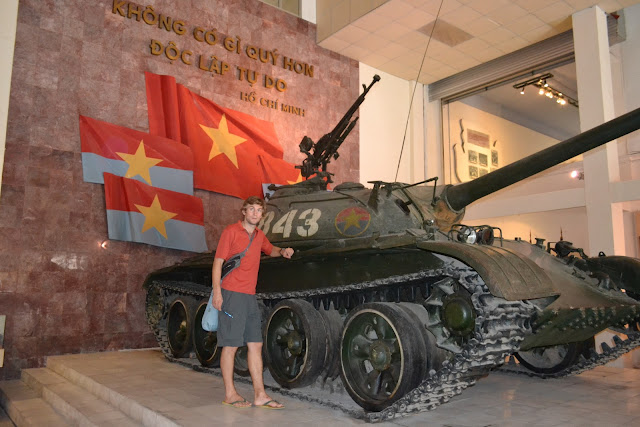
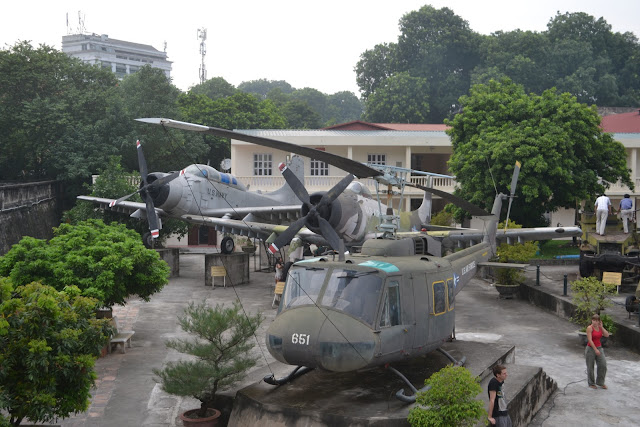
The Army Museum was very interesting, thanks to its large collection of weaponry that surrounds it; Soviet and Chinese equipment, alongside French and US made weapons captured during the years of warfare. At the front of the museum sits a T35 Russian tank, perhaps one of the greatest tanks every made. The centerpiece is the MiG-21 jet fighter that looks amazing but was no match for the US F4 Phantoms that controlled the sky's during the Vietnam war and shot many hundreds of MiG-21s down. For me the best part of the museum collection was the captured US helicopter, and F-111 plane that sit stoically next a variety of different ordnance (bombs) including the infamous cluster bombs and napalm bombs. There is also an amazing artistic sculpture made from the remains of the great killing machine, the B-52 bombers that were shot down over Hanoi. Next to the army museum is the hexagonal flag tower, one of the symbols of Hanoi that was originally built by the French in the 19th century and has had the North Vietnamese flag flying since 1954.
UH-1 Helicopter

The mighty T-54 Russian tank that stromed the presidential palace On 30 April 1975 signalling the end of the Vietnam war.

Sculpture made from parts of US planes shot down over Hanoi


MiG-21
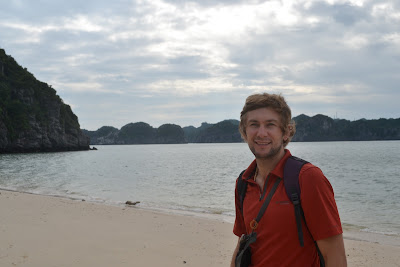
The weather finally improved and on the 2nd of October and we went on a cruise around Halong Bay, the majestic and mysterious wonder of Vietnam. Halong Bay consists of 1,959 Islands rising from the emerald waters of the Gulf of Tonkin and some of the scenery is simply breathtaking. When we were there they were applying for the status as one of the wonders of the world. We sailed around the Bay stopping off at different locations to Kayak, visit limestone caves, watch fishing villages go about their business and best off all to dive off the boat. On the second day we went trekking up to the highest point on Cat Ba Island, climbing up a very dodgy watch tower that is so rusty and broken it wobbles uncontrollably (like I was) when your at the top, but what a view. To finish the cruise we visited Monkey Island, which as you've guessed is full of monkeys. But don’t be mistaken into thinking these are lovely cute monkeys you just want to pick up and cuddle, these monkeys are evil, often drunk little baddies who want to attack you. A Russian couple got lulled into this false sense of security and ventured a little to close to the monkeys; she ended up with two monkeys hanging onto her hair, and one nearly biting her finger off, as another monkey attacked her husband, before the monkey ran off with the mans shorts over his head. What a scene, It was very funny though. Ha Ha Ha. 


Lime Stone Cliffs


Cat Ba Island home of the evil monkey
Dodgy Dive

Me and Laura nervously getting picture took before the watch tower falls down

What a View from the top of the watch tower on Cat Ba Ilsand

Sun set on the boat


Sunday, 9 October 2011

South Laos: Vientiane to Don Det

The south has its own charm and beauty; from the sleepy capital Vientiane to the remote 4000 thousand islands on the Cambodian border. On the journey one can explore the mountainous Plain of Jars, witness mighty cliffs and the breathtaking 7km limestone cave of Kong Lor, at every turn you encounter beautiful waterfalls, sip the best coffee on the famous coffee plantations on the Bolaven Plateau, pay homage to the impressive ancient temples of Wat Pho and relax on Don Det watching the Mekong river in all its glory and power drive by; a day here could very easily pass into a week... believe me.


On the 11th September we arrived in Vientiane, the 450 year old Capital that is set on the banks of the Mekong river and has been an important strategic point since the 9th century and has been controlled by the Vietnamese, Burmese, Siamese and the French. Their influences have all been left and interwoven into the culture of this sleepy capital. The highlight of the visit was meeting a Buddhist monk who's nickname was Ping. He invited us into his temple showing us all traditional ways of living until he pulled his laptop out and logged onto 'Facebook'. He was fascinated with our way of life and wanted to know everything about us, so I told him all about my family, Kirkby, Liverpool and showed him pictures of All Saints and told him about school life and the pupils. He was a Manchester City fan, which actually makes a change as everyone in Asia it seems supports Man U......Isn't that a shame? I told him that he must watch a real team, the mighty Liverpool!!!

Me and Ping
After a short drive from Vientiane on the 15th September we arrived on the southern tip of the Plain of Jars, a place called Tad Leuk. Here we camped next to a beautiful waterfall in a very secluded spot with a group of other travelers. I done some fishing just next to the waterfall, and caught one and then lost it, (a fishermans tale) but it must rank as my best ever fishing peg, what a view. 

My best ever fishing peg, Tad Leuk waterfall
The next day we travelled to Kong Lor, the mighty 7km limestone cave formed by the Hinboun River, a place were you are surrounded by beautiful high limestone karst cliffs and small traditional villages that make you feel like you have stepped back in time to a bygone age. You explore the cave by canoe, its complete darkness inside, the main cavern reaches up to 90 meters wide and 100 meters high in places, and the boat stops along the way to observe stalactites and other limestone formations. It is pitch black, and the sound on the river, the water lapping up against the rocks and the shadows created by the guides flash lights makes you feel as if you are in a 'Lord of the Rings' movie; there were times when I have expected Gollum to jump out from behind a rock....Frodo Baggins!!!. On the way back to our Hotel the local children were intrigued by us, as always. I watched children as young as 4 or 5 fishing for food, carrying firewood and other resources essential for their family. I stopped to play with them, chasing them down the road until I was like the pied piper with a line of children behind me all wanting to play. Its really amazing to see children who have absolutely nothing, who have to work most of the day and in most cases never get the opportunity to go to school and yet they are happy. They also have the upmost respect for you, when you sit down the children duck down as they pass you by so they are below your head height as a sign of respect to you. We can learn so much from these children, and it puts it in perspective on how much we take things for granted back home.


The South in all its tranquility

The breathtaking Limestone Karst cliffs of Kong Lor

Enterance To the 7km Kong Lor cave


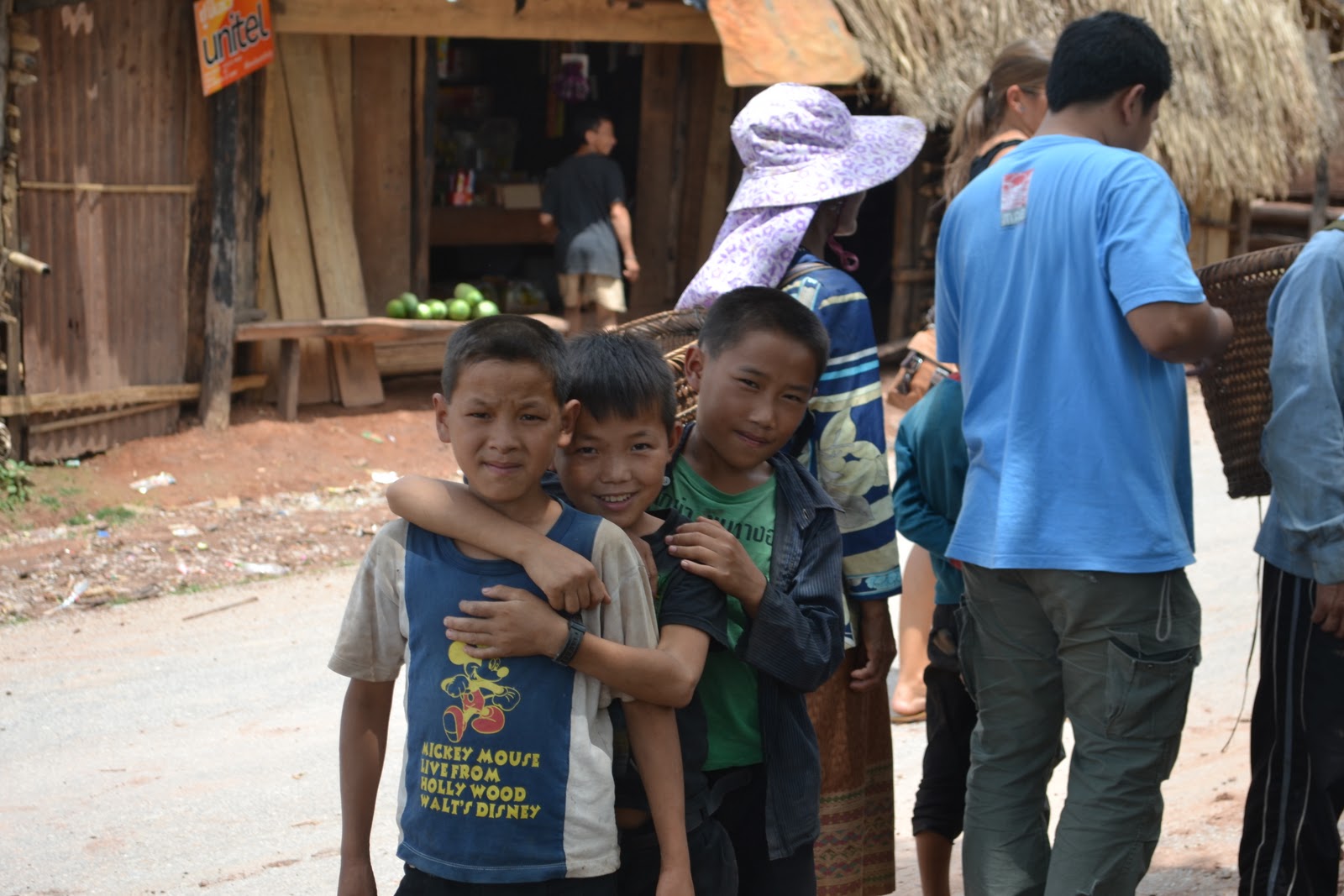
The children just want to play

It feels like the who village wants a chase

That night we had a truly enriching experience when a family in the village invited us into their home and into their family to eat dinner and take part in an important ceremony practiced in Laos culture called a 'baci'. A baci ceremony is carried out to mark important events, so to have one in our honor made us feel very special. Lao people are very spiritual who believe that spirits called 'phi' leave and enter the body all the time, the ceremony brings them back making you spiritually enriched and filled with good luck. The ritual of the baci involved the women of the house tying strings around your wrist to preserve good luck, chanting and singing prayers to you as they tie them onto your wrist. Before we ate our meal of sticky rice and chicken, the full chicken was placed on the table, in which all present was given a small piece and a prayer is chanted. This lasted about 15 minutes and then well all tucked in, washing it all down with plenty of Beerlao, as is always the custom here in Laos.

I take my piece of chicken as a prayer is chatted to me
Sticky rice is beautiful...Notice the strings tied on my right wrist for good luck

We travelled to Thakhek and stayed there for one night before heading to to Tad Lo on the Bolaven Plateau, spending the morning getting a tour of the coffee plantations by a slightly crazy Dutch man who has owned the plantation for years. It was very interesting and I learned all about the different types of Coffee beans and drank some great strong coffee that was roasted and prepared for me from scratch...you cant get fresher. We then visited Tad Yueang waterfall in Paksong, a big powerful waterfall, really beautiful before spending the night in sleepy Pakse.


Tad Yueang Waterfall
Wat Phu (or Vat Phu) which means "Temple on the Mountain" in Lao language is one of the oldest archaeological sites in Laos, located in Champassak province along the Mekong River in the southern most part of the country. It is 670km from the capital Vientiane and 50km from Pakse. Wat Phu has a complex history involving two religions; Hindu and Buddhism and spans over 15 hundred years, but the surviving structures date from the 11th to 13th centuries. Its is enchanting, mystical, peaceful and has a genuine spiritual atmosphere that engulfs you as you slowly walk up the mountain side and into the low hung clouds of the mountain once considered the home of Shiva, the Hindu god of destruction, the supreme god who has absolute authority over death, rebirth and immortality. The link below gives a detailed informative overview of Wat Phu and is worth a look to really appreciate the history of this place.

The mountain that was once considered the home of Shiva

The Buddhist Era

A look of Wat Pho from the top of the mountain
We spent one night in Don Det, which is part of the 4000 Islands, before we got on the express bus back to Luang Prabang. We spent 3 nights there relaxing, got our Vietnam Visa and booked our sleeper bus to Hanoi. The sleeper bus was eventful, bumpy and a little crazy and in all took us 30 hours to get to Hanoi. This is a new country with a different culture, a different people, and is stepped in some of the most volatile, brutal and significant history of the 20th Century that still indirectly affects us today.

Chapter 3: Vietnam.


Tuesday, 27 September 2011

The Landslide

"Make an obstacle an opportunity, make a negative a positive.” 

From Nong Khiaw we travelled by slow boat back to Luang Prabang, spending the night eating authentic food in the night market and relaxing before our journey to the party capital Vang Vieng. The food here is good, the rustic cuisine consists of fresh herbs and spices, sticky rice, grilled meats and fresh Mekong river fish. Noodle soup is the favorite breakfast dish and its best to have it with plenty of chili. However, whist this is the staple diet for Lao people, most eat absoulty anything that moves, including; crickets severed on a stick, beetles, cattle intestine, brains and even rat and dog. I was offered some rat by one of the locals who was BBQ a couple, I thought about it and after looking it in the eye thought, better not. 

The journey from Luang Prabang to Vang Vieng should take about three hours, but during the monsoon season it can take a lot longer due to landslides. The roads are not the best here in the north but the views are breathtaking high up on the mountains. Surely enough we got caught in a land slide, a very big land slide that was to take all day to clear. The traffic on the road was horrendous with traffic jams over a mile long on each side. You had two options, one you stay in the bus all day or go have a walk with our guide Munnour and visit some local villages. I opted for the latter and a bad day was to turn into one of the most inspirational days I have had so far. We scrambled up to the top of the hill and walked for a while until we arrived at a small remote village. The people were happy to see us, inquisitive and curious at our arrival. In the village all type of animals roam around, such as chickens, pigs, dogs and cats as life goes on around. There are no materialist goods, they are poor but the people are happy and it is showed by the smiles on their faces. 


View of the traffic form the mountain
After finding out our bus would be stuck there for about eight hours, we decided to go for a little adventure and with our guide. We went for a trek over the mountains with the plan off meeting the bus on the other side of the landslide. After about one hour we came to a small primary school which had three small classrooms and a small play area at the front. I was with another guy called josh who was about 6ft 3in and I am about 6ft and remember we are considerably bigger than the average village man. Furthermore these children rarely see white westerners. So, it was funny to see there faces when two big white guys walked into their school, it was a mixture of fear and curiosity. Me and Josh sat down, and after about a minute I looked up to see about fifty pupils all between age 3-11 standing about five meters away all staring tentatively and emotionless at us both as if we were both aliens from Mars. I got up and walked slowly towards them as they all took a step back still looking at us. I walked another step, and they all took another step back still looking us, curious. Then I slowly lifted my arms up, looked them all in the eye and  playfully and chased all of them into the playground. From that moment on their confidence grew and they became more comfortable with us and all they wanted to do was play.


School Playground
I noticed that the youngest class never had a teacher, so I thought I would have a little go. However by now all the children wanted to do was play. Some of the games I was playing with them on the playground invovled them repeating what I would say. In the classroom It took me 15 minutes to explain to them how to sit down, In which they would respond by simply standing up and repeating the words; 'sit down' then laugh. I taught them how to count to 10 and they taught me how to count to 10 in Laos. I wrote on the baored 'My name is.....?' I gave them an example; 'My name is John', they all repeated in broken English. Once they had got it I then tried to explain that you replace your name with John. I gave them many examples for over twenty minutes and I thought I had cracked it. Untill at the end of the lesson, when I had over twenty children all coming up to me tugging on my shirt and saying: 'My name is John', 'My name is John' 'My name is John' making me feel as though I was the lead in a Spartacus film. So in a remote part of the world, high up on a mountain, in a small school I have a class full of John's who all say it in a twang of broken Scouse.


A very basic classroom


My name is John!!! No my name is John!!!


Sunday, 25 September 2011

Northern Laos (2nd - 6th September)

We are traveling by bus, boat and tuck tuck using an open ticket with a company called 'Stray Asia'. The ticket is for one month meaning we will see the whole country from North to South. The bus also has a reputation for attracting the more adventurous travelers and local guides who take you further off the beaten track.
 
After spending a few days in Luang Prebang we travelled to the Thailand / Laos border to Huay Xai. Here we spent one night before we travelled to Luang Namther. This is quiet place, surrounded by endless paddy fields and rolling green hills. We explored the area by mountain bike, riding through paddy fields and remote villages. A former communist strong point during the Vietnam war that got bombed to bits by the US., It was also a key player in the infamous 'Golden Triangle', the trade of opium and weapons during the Indochinese wars. Its a beautiful place very peaceful and tranquil.

Our next destination was Nong Khiaw. On our way we stopped at a remote  mountain village and visited a local tribe. There are variety of ethic groups in Laos; the Lao Loum who live near the flood plains of the Mekong river; Lao Thoeng, Lao Tai and Lao Soung who live in the upland valleys and highest elevations predominately in the North and central Laos. The tribes we visited still cling on to animistic believes that proceed Buddhism, they have their own way of life which is mystical and very spiritual. They don't often see westerns but they were welcoming, shy and very curious. This was especially true of the children. They follow you around at arms length, walking behind you, the number of children growing ,until they become more confident and get a little more engaging. They love to play just like all children and their innocence, happy nature in the presence of such poverty is really touching.
The Village
Their confidence and curiosity grows
I was standing up when this young child pulled a tiny seat out for me to sit on.   

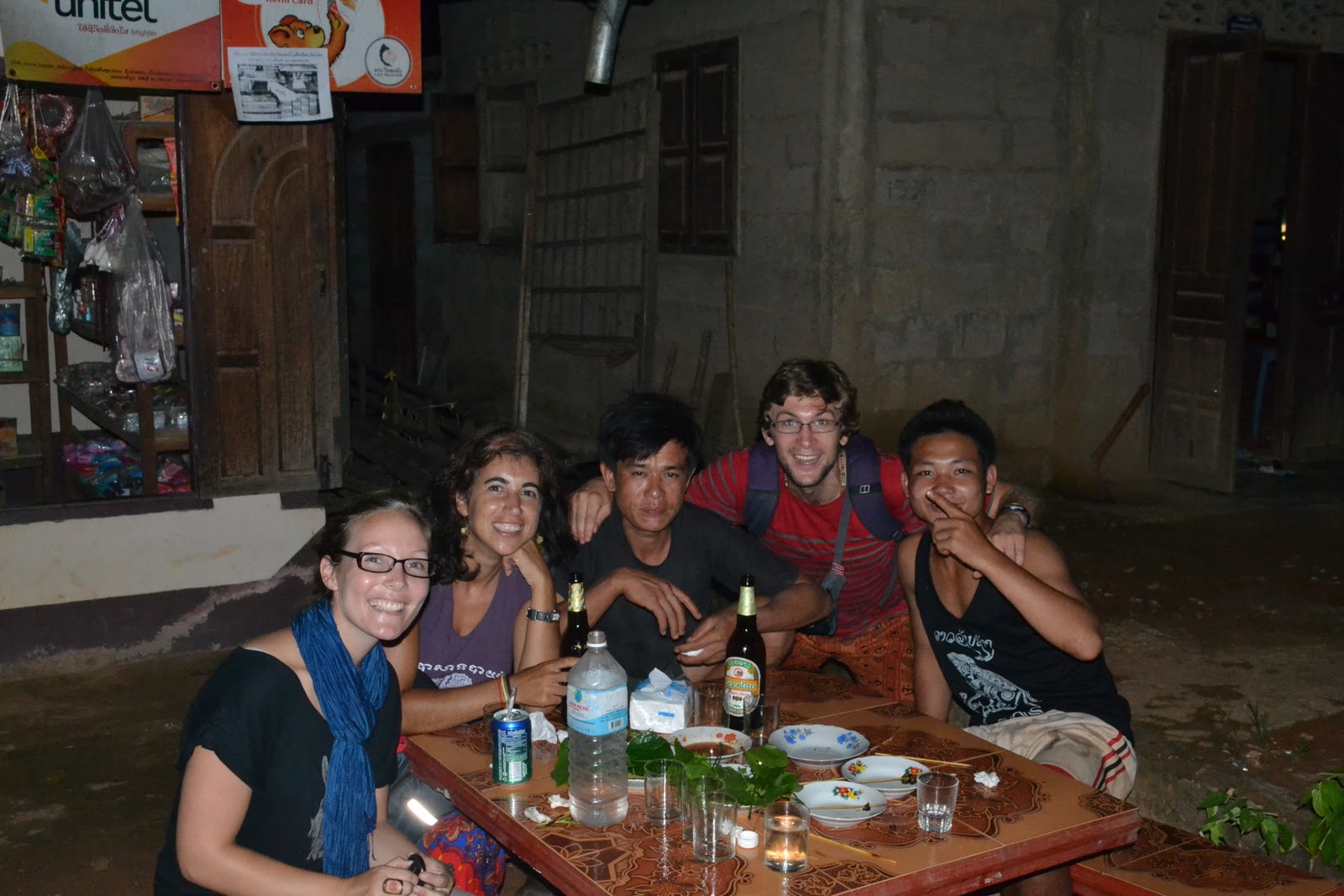
We traveled to Nong Khiaw a quiet, scenic place on the west bank of the Nam Ou river. For sheer breathtaking beauty this was one of the best place in Laos. We stayed on the river next to the bridge, surrounded by giant limestone cliffs, with low clouds that hung over the peaks. Its a mesmerizing view. We went into the village, as we wanted to engage with the locals, and thats exactly what happened. A group of young lads sitting down offered me and Laura a seat. Intrigued we sat down. There was a small BBQ on the go and few bottles of Beerlao on the table. Well its Laos culture to offer the guest a drink, as they believe it gets rid of bad spirits. However here the favorite tipple is a full bottle of Lao Lao white whiskey, which must all be consumed before you leave. You drink the whiskey neat and in one go, its very strong and its got a kick like a mule. But it hits the spot. We ate snails wrapped up in herbs dipped in hot chili and washed it down with plenty of  Lao Lao just as the sun was going down behind the cliffs. After one hour and after a full bottle of whiskey we walked, I mean wobbled home on unsteady legs. Great night.

More Lao Lao whiskey anyone

On top of the Bridge Nong Khiaw

Nong Khiaw


The next day we got on the slow boat Luang Prabang visiting the Thamting cave which has over two thousand Budda images inside dating back over six hundred years. 


Slow Boat to Luang Prabang


Laos: The Land of a Thousand Elephants

The new Raven flew over terrain unlike anything he had ever seen before. Mountains erupted out of a sea of green jungle, some shaped like cones with sharp jagged edges, others thin as knife blades. Towers of limestone stood sentinel on the banks of rivers which twisted between them. From the air the countryside took on the shapes of fantastical animals. In monsoon season the craggy limestone rocks know as karst was covered with moss and green slime. Trees somehow grew from the cracks in the limestone, clinging to the mountains like gnarled old hands. The landscape was primeval, a million years out of its time, the setting for a pterodactyl to come flapping out of the dripping rocks. After the monsoon the whole area blossomed. A thousand different kinds of wild flowers carped the valley. There were giant yellow daises as tall as a man, and acre upon acre of white and red poppies . No one could fail to recognize that this was a place of very great beauty.   


-Christopher Robbins 'Pilots of the Secret War of Laos'

Looking over the Plain of Jars
I write this part of the journal at the end of almost four weeks of traveling the length and breadth of this remarkable country. I feel it near impossible for me to explain how beautiful and breathtaking this country is in words and pictures, they just can never truly justify what one has seen or experienced. But I will try to convey its beauty as best I can. The words above come from Christopher Robbins who illustrates brilliantly the landscape of Laos which is often referred to as; The land of a Thousand Elephants. I have been reading his book with interest on the secret war carried out by the American CIA on the North Vietnamese Army to prevent what Eisenhower called the first 'domino' in South East Asia falling to communist forces. Under the Geneva convention no armed force could occupy Laos. However this was ignored by both forces, due to the geographical strategic position Laos had the misfortune to be in. Peaceful Laos, landlocked, lies between powerful, perpetually (at the time) warring neighbours. To the north lies Burma and China, to the south is Cambodia, to the west largely drawn by the Mekong is Thailand, and to the east the country shares a 1,324 mile long boarder with Vietnam. During the the 1960s and early 1970s Laos people suffered appallingly  from both USA and Vietnam and is today the most bombed country in history. The CIA put together a secret program called 'The Steve Canyon Program' which trained pilots code named 'Ravens' who in effect never existed, to guide US fighter jets to bomb North Vietnamese positions in North East Laos, the Plain of Jars and the Ho chi min trail. During this terrible period, much of the population hid for years in caves to escape the massive bombing campaign and the effects of bombing are still evident today, with over a dozen people each year killed by unexploded devices, most notably the notorious cluster bombs. 

We arrived in North Laos on Tuesday 30th August to a place called Luang Prabang. This was the capital till 1960s until it moved south to Vientiane on the Thai boarder. Its a charming place full of Buddhist temples and monks who, daily at dawn, walk through the streets barefoot taking part in the Alms procession. This is quiet, spiritual and meditative ceremony in which the monks demonstrate their vows of poverty and humility thus gaining spiritual merit. The People here are the most relaxed people in the world and  their motto; "Never Rush" really reflects their attitude to life. Its philosophy that really suites me, and a way of live that is interwoven into all of Laos culture. It can be a little annoying, however, when your stuck in landslide (which is often the case during monsoon season) and its take the workers 8 hours to clear it because they just take there time, 'never rush'.

On our second day we kayaked down the Nam Khan river to a beautiful waterfall called Tat Kuang. Here we spent the afternoon bathing elephants in the in crystal pristine water, and enjoying the swing. Its was great getting in the water with the elephants (they love the water to play) but it was clear to me that my elephant wanted to show me who was boss. As we approached the water with myself on its back, it swaggered, dropped and flipped me into the water. I went head over heels past its drunk into the water. He then rolled over on to his side, so I was looking inot its eyes and proceed to let three massive balls of poo into my face as the current took me right into the direction of the oncoming cargo. 

Who's the daddy

Tat Kuang Si Waterfalls
With our guide we kayaked down the Nam Khan River; it was so peaceful just floating down the river, surrounded by rolling cliffs and the occasional loan fisherman in his boat silhouetted against the sun. It would take us over two hours to get back. On the way we passed children playing in the water, some even jumping off 40ft overhanging trees into the water. It looked good, and our guide offered, I mean dared me to have go. I couldn't refuse, if children as young as 7 are doing it, I have got to do it. We pulled up to the overhanging tree, I climbed up to the top, and almost froze. It was high, very high and when your looking down at the fast flowing river it gets a little scary. But I had no choice and I went for it. It was quality, straight back to the top for another go. Its was very calm kayaking down the river, until we hit the rapids. I wasn't expecting big rapids but we got a load of them.The Kayaks are for two people, me at the back, Laura at the front. We were doing well until we hit a big rapid, my last words were; "let me stare!!!" at which point the kayak went side on and flipped capsizing us both into the water leaving us flying down the river. Well Its no fun unless you go in.
The Nam Khan River


One of the many Buddhist Temples in Luang Prabang

The Night Market

Wednesday, 14 September 2011

Varkala and Kovalam Beaches to Trivandrum and Mumbai. Good Bye India


The south of India has some of the most beautiful beaches in India and with that in mind we decided to spend our last two weeks sitting on them, before heading to Trivandrum to pick up our internal flight back to Mumbai before heading to Asia for 6 months.

Varkala Beach
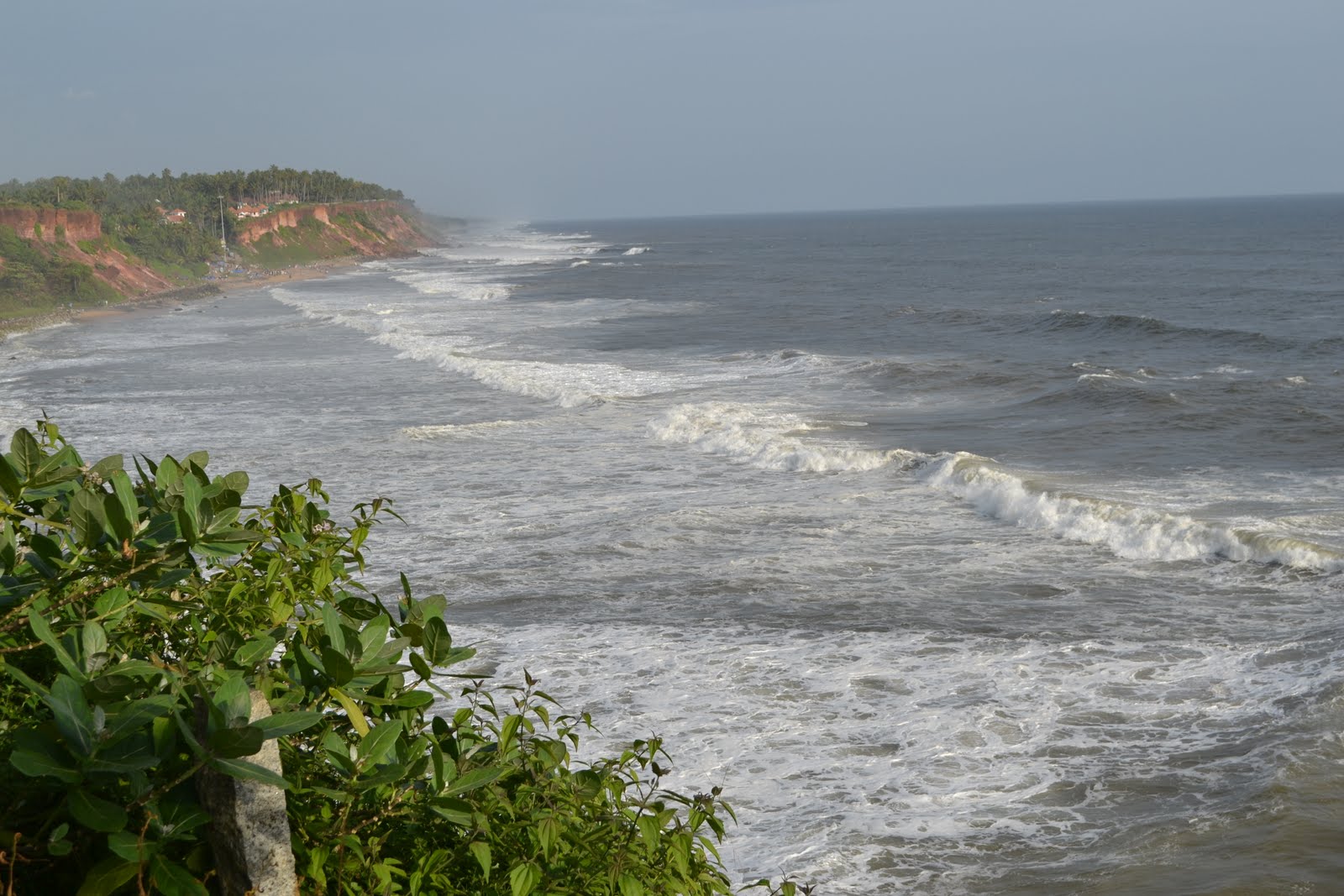
We stayed in Varkala form Tuesday 16th-Monday 22nd August. This is a little more of a tourist destination than what we had been used to, but, it is simply a little piece of Paradise we couldn't resist. The beach cliffs are simply stunning and its great to just sit back and watch the monsoon waves crash into the cliffs. We spent most of our time on a small secluded beach, lazily dreaming the days away in the sun, then finishing the week with a traditional massage the Ayurvedic way.


“To live is the rarest thing in the world. Most people exist, that is all.”
Oscar Wilde

Me and the Hammer Head shark-It was so heavy I needed a little help

We stayed in Kovalam 22nd to 26th August. We chilled on beaches and opened our minds to Yoga & meditation for the first time, almost breaking my neck doing a head stand and viewed the beach from the lighthouse
My first head stand
The view is stunning even if I am a little scared og heights
We travelled to Trivandrum, the main city in the south and a common place for travellers to muse around whilst in transit. Its a big, big city, similar to Mumbai, but not as intense. We spent one night there watching, you would'nt believe it,  Rocky 4 (what a film, pure cheese and bad acting but a quality mix, best line; 'if he beats me he is going to have to kill me') and my first Liverpool game of the season, beating Bolton. Great unexpected night.

We arrived in Mumbai on 28th August not particularly looking foreword to another nights stay in this city. However, it turned out to be an amazing experience. Our flight out to Bangkok was 9am the next day so we decided to 'Couch Surf' to save money. Its basically a network of people who you contact using a website similar to Facebook and stay at their place free of charge. Its great because you get a true experience of their culture. We stayed with a guy called Mikhil in the Bandra district, were many Bollywood actors hang out. The only problem was he's a Man U fan. He took us out into the town and we tried all the local street food, which was spicy and very tasty and he showed us around the area. What a great way to end our trip of India.


You dont normally see me eating with a Man u fan-Me and Laura with Mikhil

Next chapter......Laos.